
Advanced UHT and ESL Processing for Product Quality, Efficiency and Flexibility
| Access-products | |
|---|---|
| Application | , |
| Brand | |
| Industry | , , , , |
Every ESL or UHT product places different demands on a UHT system. A premium milk, an oat beverage and a high-protein nutritional drink may all require extended shelf life, but the processing approach needed to achieve the desired quality, operational efficiency and production performance can vary significantly.
Today’s producers seek to reduce energy consumption, improve sustainability, extend production runs and bring new products to market faster. At the same time, consumers expect high-quality products with appealing taste, texture and nutritional value. Balancing these requirements requires more than simply applying heat. It requires selecting the right processing technology for the product, the process and the business objectives.
The APV portfolio combines direct and indirect UHT technologies that help manufacturers address a broad range of processing challenges. Whether the priority is premium product quality, production flexibility, operational efficiency or long-term sustainability, producers can choose solutions designed around their specific requirements rather than a one-size-fits-all approach.
Processing Advantages
APV UHT processing systems help manufacturers:
- Preserve product quality through precise thermal treatment
- Reduce fouling and extend production run times
- Lower energy consumption and operating costs
- Improve sustainability through heat recovery and steam reuse
- Support food safety and operational reliability
- Increase production flexibility across multiple product types
- Improve operational visibility through digital monitoring and analytics
Complete UHT Processing Solutions
Successful aseptic processing depends on more than the UHT system itself. APV technologies are designed to integrate seamlessly with homogenizers, deaerators, mixing and blending systems, aseptic tanks, automation platforms and filling solutions to create complete processing lines.
Supported by application expertise, Innovation Center testing and lifecycle services, manufacturers can evaluate products, optimize processing conditions and reduce project risk before full-scale implementation. Through collaborations with leading aseptic packaging partners, complete end-to-end solutions can be tailored to specific production requirements.
Why Producers Choose APV
For more than a century, dairy and beverage producers have relied on APV thermal processing technologies to help bring safe, high-quality products to market. From premium dairy products and nutritional beverages to large-scale beverage production, APV combines proven processing technologies with the flexibility to address evolving consumer demands and manufacturing challenges.
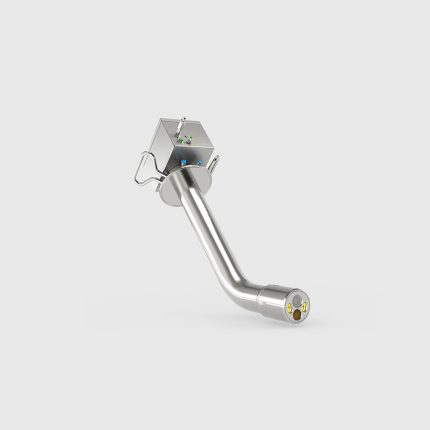
What differentiates APV is not a single technology, but the ability to help producers identify the right processing approach for their product, production goals and long-term business strategy. Through a combination of direct and indirect UHT technologies, innovation-focused solutions such as SteamRecycle™, the Seamless Infusion Vessel and Aseptic Pulsation Dampener, Innovation Center testing, digital solutions such as TruView™ Monitoring and comprehensive lifecycle support, manufacturers can optimize product quality, improve operational efficiency and invest with confidence.
Selecting the Right APV UHT System
Choosing the right APV UHT system is essential to achieving the desired product quality, operational efficiency and total cost of ownership. While some applications have a clear solution, others require careful evaluation of product characteristics and processing requirements.
Key factors to consider include:
- Product formulation and quality requirements
- Viscosity and presence of particulates or fibers
- Heat sensitivity and stability
- Acidity (high- or low-acid products)
- Required flexibility and production capacity
- Preference for direct or indirect heating
- Operator skill level and plant capabilities
UHT systems are often designed to process multiple products, making flexibility and scalability important considerations when selecting the right solution.
Compare APV UHT Technologies
The table below compares the primary APV UHT technologies and highlights the applications where each technology delivers the greatest value.
Choosing the Best Technology
The following recommendations provide a useful starting point when selecting an APV UHT system.
- Choose Plate UHT for cost-effective processing of low-viscosity products with high energy efficiency.
- Choose Tubular UHT for reliable processing of viscous, fibrous or particulate products.
- Choose SSHE UHT for highly viscous, shear-sensitive or particulate products that require continuous scraping to reduce fouling and maintain consistent performance.
- Choose Injection UHT when you need an effective balance of product quality, flexibility and processing performance.
- Choose Infusion UHT when preserving product quality and minimizing thermal impact are the highest priorities.
For more complex applications, APV works closely with producers to evaluate product characteristics, production objectives and processing requirements. Through our global Innovation Centers, customers can test formulations, validate processing conditions and compare different UHT technologies before investing in a production system. This helps ensure the selected solution delivers the desired product characteristics, operational performance and long-term value.
UHT Technology Suitability by Application
Every application has different processing requirements. The tables below provide general guidance for selecting the most appropriate APV UHT technology.
Insight
Direct Infusion UHT is often the preferred choice for premium dairy, plant-based and nutritional beverages because it minimizes thermal impact while helping preserve taste, color, nutritional value and overall product quality. However, the optimal solution always depends on product formulation and processing requirements.