
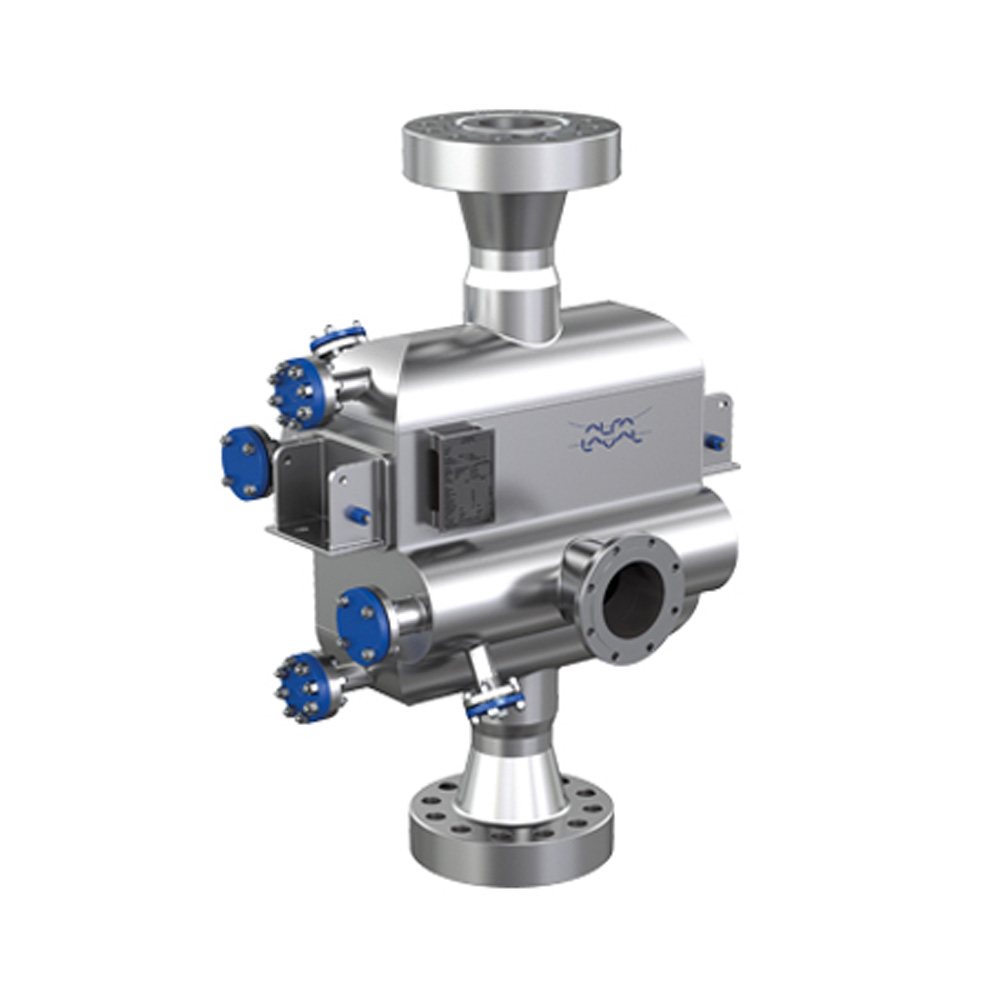
PCHE
| Brand |
|---|
Trust the results from 15 years of proven performance. Alfa Laval printed circuit heat exchangers (PCHEs) combine superior robustness and integrity with an exceptionally high heat transfer rate, in a unit that’s up to 85 % smaller and lighter than comparable shell-and-tube and shell-and-coil exchangers. The unique design results in excellent performance, lower installation and operational costs, as well as improved safety. Each unit is also fully customizable according to your exact needs.
First-class efficiency with the smallest possible footprint
- All-stainless-steel design, available in standard configurations or fully customized
- Robust design handles pressures up to 1,250 bar (18,125 psi) and temperatures ranging from -253°C (-423°F) to ~800 °C (1472°F)
- Immune to fluid pressure pulsations and fluid-flow-induced vibration, which can cause fatigue failures
- Fully compliant with ASME Boiler & Pressure Vessel Code (Section VIII, Division 1 with U Certification Mark) and CE Marking (as per PED 2014/68/EU)
- Conformance with ISO 19880 and SAE J2601 for hydrogen refuelling dispensers.
Alfa Laval printed circuit heat exchangers are an ultra-compact solution for improving sustainability in marine, oil & gas, thermal and renewable power applications (such as thermal energy storage systems, supercritical CO2 power cycles, gas turbine fuel gas pre-heating and hydrogen refuelling stations, etc.).
Photo-chemically etched fluid micro-channels provide exceptionally high thermal performance, while state-of-the-art diffusion welding (bonding) produces a solid core packed with heat transfer area.
The combined result is maximum efficiency and minimum footprint, ensuring the lowest total lifecycle cost.
Unique features that make our PCHEs difference
Alfa Laval has more than 80 years’ experience in heat transfer technology, and we are continuously developing new innovations to improve the performance, reliability and sustainable impact of our equipment. Our printed circuit heat exchangers include a number of unique features you won’t find anywhere else.
OptiBond™
A robust and compact solution for high-pressure needs
State-of-the-art diffusion welding (bonding) technology provides the highest durability and thermal efficiency within an ultra-compact welded plate heat exchanger.
3DPlate™
Prevents clogging under freezing conditions
A patented 3D plate pattern maintains high efficiency and maximum uptime when using water-based fluids like glycols in cryogenic applications.
How the PCHEs work
Working principle
Printed circuit heat exchangers operate with two or more media on opposite sides of a diffusion welded plate. It is possible to have high-pressure flows on both sides, and a 2D or 3D plate pattern can be optimized to provide the required thermal length and pressure drop.
Design
The printed circuit heat exchanger design has a complex flow pattern chemically etched on flat sheets of material. This flow pattern is optimized for each specific customer duty to provide the required thermal and hydraulic characteristics. Each flow circuit plate pattern can be different, giving the possibility of asymmetric flows and optimized 2-phase behaviour.
The individual plates are then stacked into a block and diffusion welded (bonded) in a state-of-the art furnace at high temperature and pressure. Multiple blocks can be welded together to create the required thermal capacity or heat transfer area. Inlet and outlet flow manifolds, customer connections and (if required) connections for drain, vent or cleaning form the welded header assemblies, which are welded onto the completed core to finalize the heat exchanger.
Design pressures of up to 1,250 bar (18,125 psi) in 304/316 stainless steel are achievable with this configuration.
Heat transfer surface areas are tailored based on requirements.