
Homogenizers

Homogenizers are specialized industrial machines used to reduce particle size and evenly distribute solid or liquid components within a fluid, creating a stable, uniform product. These machines are essential in industries such as food & beverage, dairy, pharmaceuticals, biotechnology, chemicals, and personal care manufacturing, where consistency, texture, and shelf life are critical.

What Is a Homogenizer Machine?

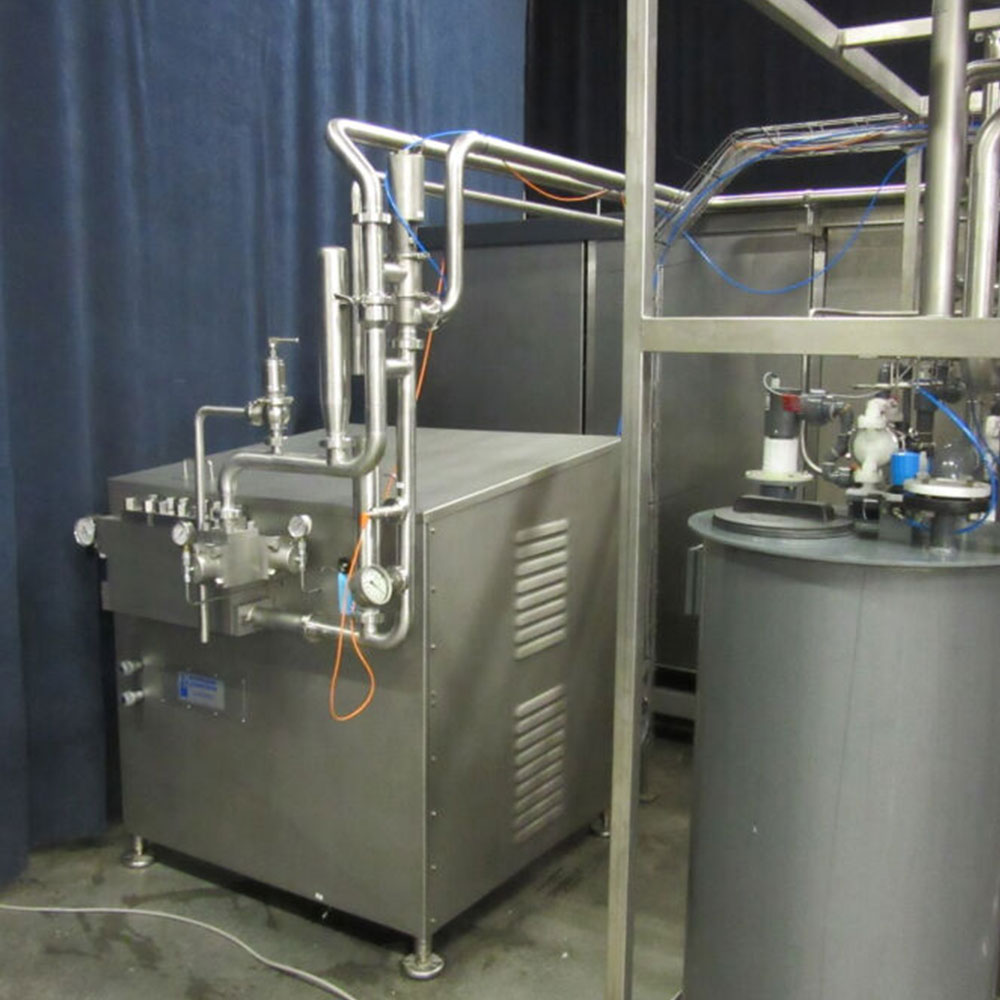
A homogenizer is a high-pressure mechanical device that forces a liquid product through a narrow gap or valve, causing intense shear, turbulence, and cavitation. This process breaks down particles and droplets into microscopic sizes, preventing separation and improving product appearance, taste, and stability.
Types of Homogenizer Machines

  1. High-Pressure Homogenizers
  • Operate at very high pressures
  • Produce extremely fine and uniform particle sizes
  • Widely used in dairy, beverages, and pharmaceuticals
  1. Single-Stage Homogenizers
  • Use one homogenizing valve
  • Suitable for basic emulsification
  • Cost-effective for standard applications
  1. Two-Stage Homogenizers
  • Use two sequential homogenizing valves
  • Improved emulsion stability and texture
  • Common in milk, cream, and beverage processing
  1. Ultrasonic Homogenizers
  • Use high-frequency sound waves
  • Ideal for laboratory and small-batch production
  • Used in biotechnology and research
  1. Inline Homogenizers
  • Installed directly in processing lines
  • Continuous operation with high efficiency
  • Used in large-scale industrial plants

Applications of Homogenizer Machines

Homogenizers are widely used across multiple industries:

  • Food & Beverage: Milk, cream, sauces, juices, flavored drinks
  • Dairy Industry: Fat globule size reduction in milk
  • Pharmaceuticals: Suspensions, emulsions, vaccines
  • Cosmetics & Personal Care: Creams, lotions, shampoos
  • Chemical Industry: Emulsions, dispersions, and slurries

Benefits of Homogenizer Machines

  • Improved product consistency and texture
  • Enhanced stability and longer shelf life
  • Uniform particle distribution
  • Better taste, appearance, and mouthfeel
  • High efficiency and repeatable results

Key Components of a Homogenizer

  • High-Pressure Pump
  • Homogenizing Valve Assembly
  • Drive System
  • Pressure Control System
  • PLC / Control Panel

Maintenance & Operational Considerations

  • Regular inspection of homogenizing valves
  • Proper pressure and temperature control
  • Use of CIP systems for hygienic cleaning
  • Timely replacement of wear parts

Conclusion

Homogenizer machines are indispensable for producing stable, high-quality products that require uniform texture and composition. By ensuring fine particle size reduction and consistent emulsification, homogenizers help manufacturers meet strict quality standards while enhancing product performance and consumer satisfaction.

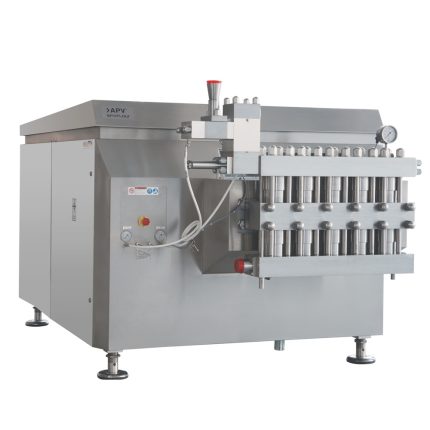
APV Rannie® 160Q / Gaulin® 160Q – High Pressure Homogenizers

The Rannie 160Q and Gaulin 160Q are high-performance, high-pressure 5 plunger homogenizers engineered for superior particle size reduction and emulsion stability. Designed for a wide range of industrial and sanitary applications, these homogenizers deliver consistent results with maximum efficiency and reliability.