Heat Exchangers

Heat exchangers are critical industrial machines designed to transfer heat between two or more fluids without allowing them to mix. They play a key role in maintaining precise temperature control in manufacturing processes across industries such as food & beverage, pharmaceuticals, chemicals, oil & gas, power generation, HVAC, and water treatment. By improving energy efficiency and process reliability, heat exchangers are an integral part of modern fluid handling systems.

What Is a Heat Exchanger Machine?

A heat exchanger is a mechanical device that allows heat to move from a hot fluid to a cold fluid through a solid separating surface, such as metal plates or tubes. These machines help in heating, cooling, pasteurizing, condensing, or evaporating fluids while ensuring safety, hygiene, and energy conservation.

Types of Heat Exchanger Machines

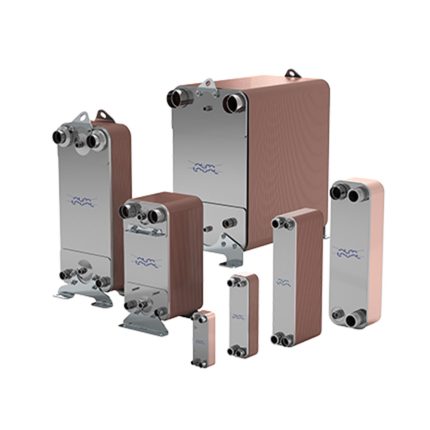
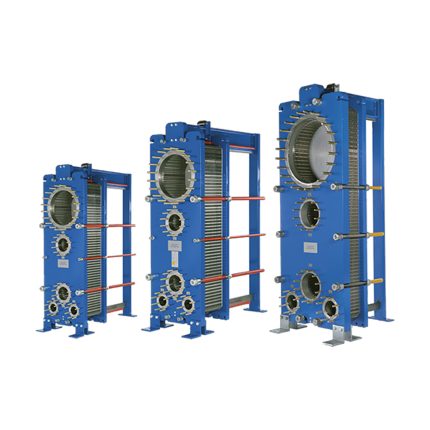
  1. Plate Heat Exchangers

Plate heat exchangers use thin, corrugated metal plates to transfer heat efficiently.

  • High heat transfer efficiency
  • Compact and space-saving design
  • Easy to clean and maintain
  • Widely used in food, beverage, and dairy industries
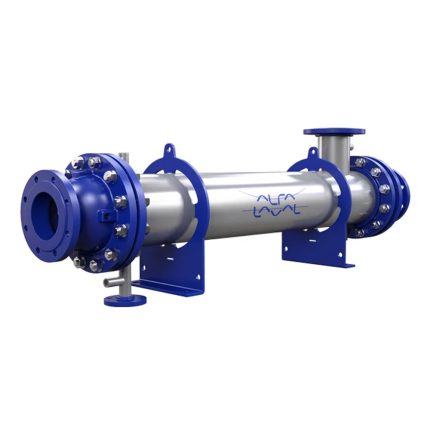
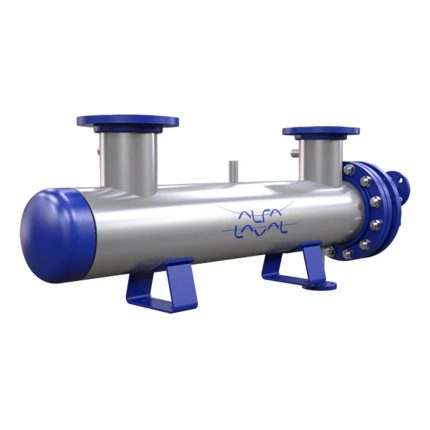
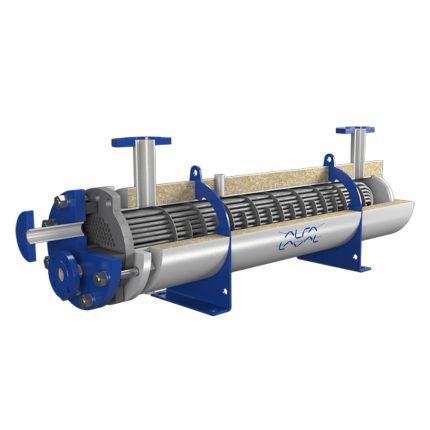
  1. Shell & Tube Heat Exchangers

These consist of a series of tubes enclosed within a shell.

  • Suitable for high pressure and temperature applications
  • Robust and durable design
  • Common in chemical, oil & gas, and power industries
  1. Double Pipe Heat Exchangers

A simple design with one pipe inside another.

  • Ideal for small-scale operations
  • Easy installation and maintenance
  • Used in pilot plants and small process lines
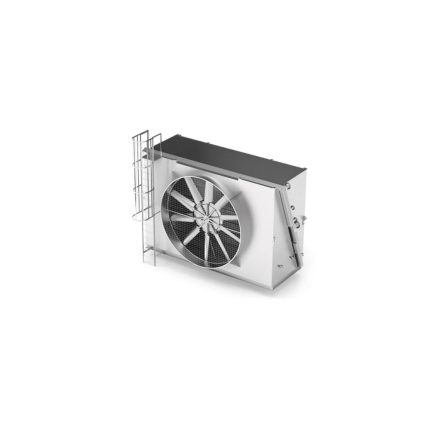
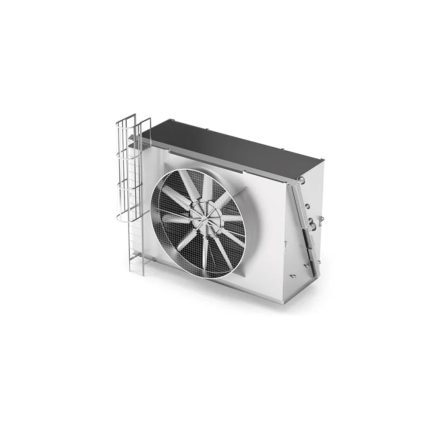
  1. Air-Cooled Heat Exchangers

Use ambient air to cool fluids.

  • No water consumption
  • Suitable for remote or water-scarce areas
  • Common in petrochemical and power plants

Applications of Heat Exchanger Machines

Heat exchangers are used in a wide range of industrial processes:

  • Food & Beverage: Pasteurization, cooling of juices, milk, and syrups
  • Pharmaceuticals: Temperature control in sterile processing
  • Chemical Industry: Heating and cooling of reactive fluids
  • HVAC Systems: Heating and cooling buildings
  • Power Plants: Steam condensation and heat recovery

Benefits of Heat Exchanger Machines

  • Improved energy efficiency
  • Precise temperature control
  • Reduced operational costs
  • Enhanced product quality and safety
  • Compact design with high performance

Materials Used in Heat Exchangers

Heat exchangers are manufactured using materials selected based on process requirements:

  • Stainless Steel (SS304, SS316)
  • Carbon Steel
  • Copper and Brass
  • Titanium (for corrosive fluids)

Maintenance & Safety Considerations

Regular inspection and maintenance ensure long service life:

  • Periodic cleaning to prevent fouling
  • Monitoring pressure and temperature
  • Leak detection and gasket replacement
  • Compliance with industry safety standards

Conclusion

Heat exchanger machines are indispensable in industrial fluid handling systems, offering efficient heat transfer, energy savings, and consistent process control. Selecting the right type of heat exchanger based on application, fluid properties, and operating conditions ensures optimal performance and long-term reliability.

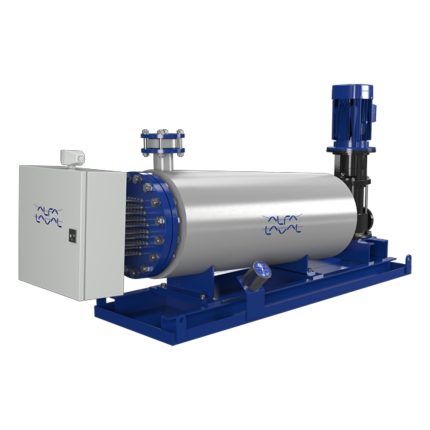
Aalborg EH

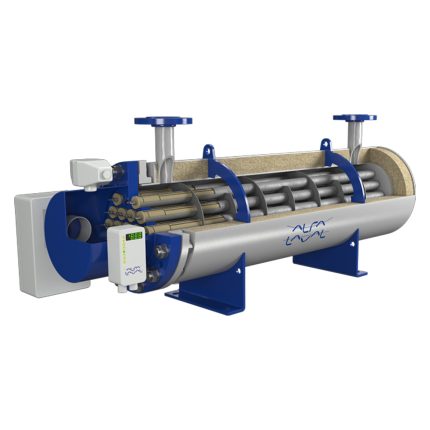
The Alfa Laval Aalborg EH is a flow-through electric heater, ideal for oil heating. Its heat load capacities range from 5 to 233 kW, with design conditions up to 16 bar(g) and 160°C. The Aalborg EH can be mounted horizontally or vertically in its standard configuration, and it is also available as an outflow suction heater or tank-mounted immersion heater. The Aalborg EH is approved by all major marine classification societies and is CE/PED approved.

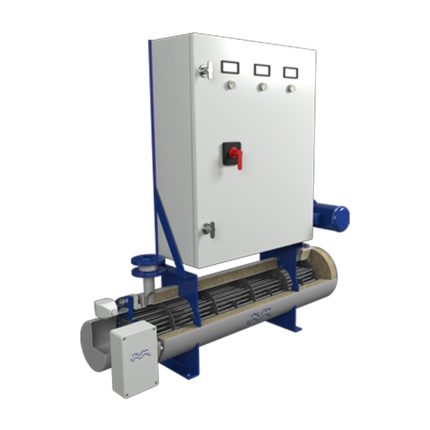
Aalborg EH-S

The Alfa Laval Aalborg EH-S is a flow-through electric heater designed for steam production. This horizontal unit works in connection with an existing boiler, which acts as the steam drum. It offers load capacities up to 270 kW, with standard design values of 16 bar(g) and 204°C. The Aalborg EH-S complies with European standards and is easy for classification societies to approve.

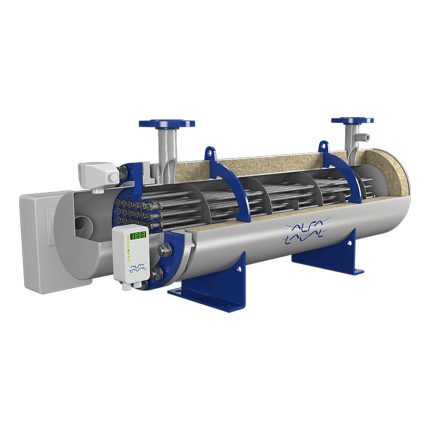
Aalborg EH-U

Ideal for heating engine jacket cooling water, the Alfa Laval Aalborg EH-U is a flow-through electric heater with a single-pass configuration. Baffle plates optimize its heating surface, which creates a very compact unit with high efficiency. This horizontal unit offers load capacities from 15 to 270 kW, with standard design values of 10 bar(g) and 95°C. The standard Aalborg EH-U design range is approved by all major marine classification societies and is also CE/PED approved.

Aalborg EH-W

The Alfa Laval Aalborg EH-W is a flow-through electric heater, ideal for heating technical treated water. It is also available in a design applicable for bilge water, or as an outflow suction heater or tank-mounted immersion heater. Its heat load capacities range from 15 to 486 kW, with design conditions up to 10 bar(g) and 95°C. The standard Aalborg EH-W heater design is approved by all major marine classification societies and is CE/PED approved.

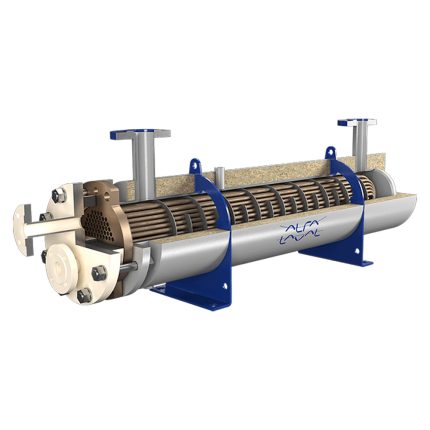
Aalborg MC

The Alfa Laval Aalborg MC is a compact shell-and-tube heat exchanger with U-tubes. It is designed to cool oil or steam by means of either fresh water or seawater. Its load capacities range from 10 kW to approximately 5000 kW, with design conditions (shell/tube) up to 13/13 bar(g) and 300/100°C. The Aalborg MC heat exchanger is approved by all major marine classification societies and is CE/PED approved.

Aalborg MD

The Aalborg MD-T is a shell-and-tube heat exchanger for heating seawater, ideal for tank cleaning. It handles a seawater flow of 180–380 m3/h using steam as the heating medium, with design conditions of 16 bar(g) and 204°C. The Aalborg MD-T is approved by all major marine classification societies and is CE/PED approved.

Aalborg MP-C

The Alfa Laval Aalborg MP-C is a compact shell-and-tube heat exchanger, ideal for cargo heating. A specially designed baffle arrangement gives it a high heat transfer coefficient, which promotes cleanliness and operating stability. The standard unit offers load capacities of 250–2000 kW, with design conditions (shell/tube) of 14/10 bar(g). Other capacities and design conditions are available on request. The Aalborg MP-C meets the requirements of all major marine classification societies.

Aalborg MX

The Aalborg MX is a compact shell-and-tube heat exchanger with U-tubes, ideal for heating oil or water. It uses either steam or thermal oil as the heating medium. Its heat load capacities range from 10 kW to approximately 2000 kW, with design conditions (shell/tube) either up to 16/16 bar(g) 160/204°C or 32/19 bar(g) 195/212°C. The Aalborg MX is approved by all major marine classification societies and is CE/PED approved.

AC

With the integrated but flexible DynaStatic distribution system, Alfa Laval AC brazed heat exchangers can provide high performance in evaporation and condensing duties. In many cases, this performance can be 20-40% greater than comparable heat exchangers without a distribution system. This offers big advantages both for reversible systems and when defrosting is key to the application. Alfa Laval has specially engineered the AC line for air conditioning/refrigeration chiller applications and heat pump applications. Common duties include dry expansion evaporators for cooling water or glycol, condensers for rejecting or recovering heat to water, economizers, subcoolers, and desuperheaters.

ACE

Alfa Laval has extensive service experience with nearly every brand on the market. You can count on us, year-in and year-out, to deliver original equipment, original air cooler parts, and the expertise needed to keep any and all of your air-cooled heat exchangers in perfect working order. Plus, we can help you save time, money, and CO2 emissions along the way.

Air Cooled Heat Exchangers

Air flow is nature’s own method of regulating temperature. Alfa Laval offers a wide range of energy-efficient high-performance systems for air-cooled heat exchange in industrial applications.

AlfaCond

Alfa Laval AlfaCond condensers are specifically designed for condensing of vapour under vacuum. These plate surface condensers are ideal for use in applications such as vacuum condensers in evaporation systems, ethanol condensers in bioethanol plants, pan vapour condensers in sugar refineries, and as turbine condensers in small power plants. With its compact design, AlfaCond is easy to install where space is crucial.